
You Gave CS a Revenue Target. You Didn't Give It a Revenue Engine.
Renaming the function takes an afternoon. Rewiring how it works takes a quarter. Most companies have done the first and called it done, and the gap between the two is where retention quietly leaks.
- Most CS teams have been given a revenue label. Far fewer have been given a revenue operating model.
- 56% of CS teams are paid on expansion, but median variable comp is 20% of total pay, and 10% when CS sits in cost of delivery.
- Across 658 live CS job listings, 23.6% carried a revenue ownership signal and only 2.1% carried an actual quota.
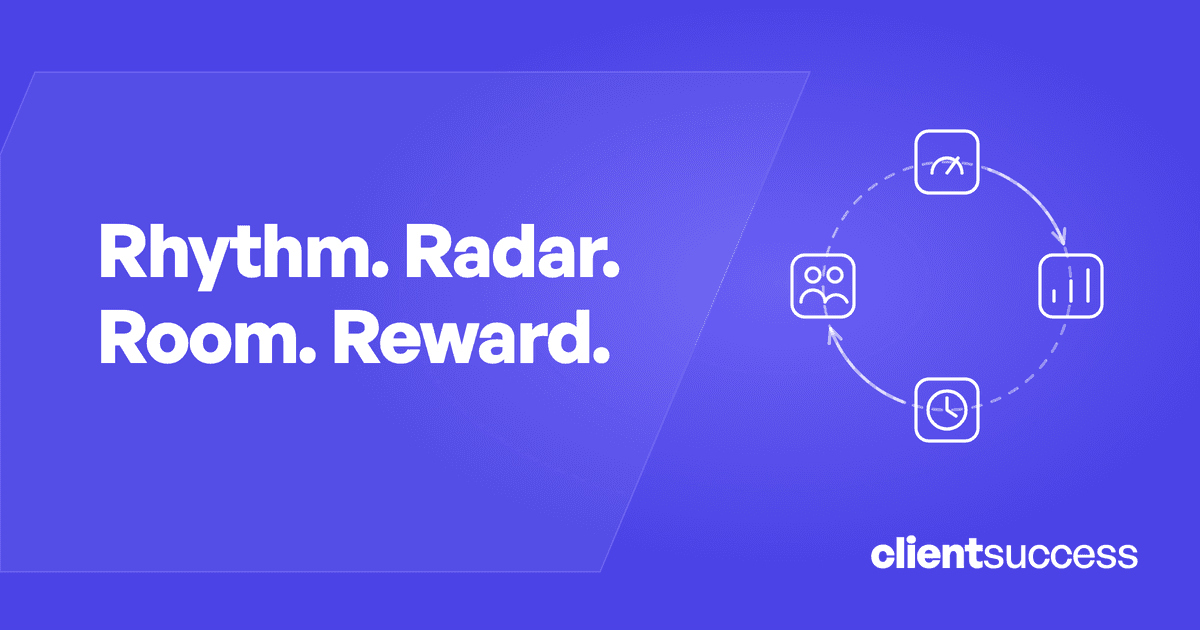
- Four things have to change for the label to mean anything: the cadence, the signals, who is in the commercial conversation, and what the comp plan pays for.
There is a version of this that every customer success leader has lived through. A new fiscal year starts. A slide goes up saying CS now owns net revenue retention. The job descriptions get rewritten, the function gets a new reporting line, and everyone agrees this is the right direction.
Then the quarter starts, and the weekly team meeting runs exactly as it ran before. The health score dashboard is the one built two years ago by someone who has since left. The CSMs still route every pricing question to an account executive. And the comp plan still pays mostly for being generally good at the job.
Nothing is wrong with any individual piece of that. The problem is the sum. A revenue mandate was placed on top of an operating model designed to prevent churn by being helpful, and those are not the same machine.
What is a customer success revenue engine?
A customer success revenue engine is a CS team whose operating model, not just its job description, is built to produce retention and expansion revenue: a meeting cadence that surfaces commercial risk early, a signal layer that supports a renewal forecast a CFO will accept, CSMs who sit inside the commercial conversation, and compensation that pays for the outcome the team is held to.
The word doing the work there is operating. A revenue label is a statement about accountability. A revenue engine is a statement about mechanics. You can issue the first by email. The second takes a quarter of deliberate change, and it is the part that most reorganisations skip.
How big is the gap between the label and the engine?
Median variable compensation for customer success is 20% of total pay, falling to 10% when CS is booked into cost of delivery. Only 5% of companies pay CS a variable split of 40% or more, while most sales reps run on 50/50 (CJ Gustafson, Mostly Metrics, survey of 132 tech companies, January 2026).
Put that next to the other finding from the same survey: 56% of CS teams are paid on expansion revenue in some form. So most teams now have expansion somewhere in the comp plan, and almost none have it at a weight that would change a decision on a Tuesday afternoon. If the expansion component is half of a variable that is itself a fifth of total pay, you are asking someone to restructure their week for roughly 10% of their compensation. People are rational. They keep doing the thing they are actually paid for.
The hiring data tells the same story from a different angle. An analysis of 658 live customer success listings found 23.6% carried an explicit revenue ownership signal, an NRR target, an upsell mandate or a quota. Only 2.1% carried an actual quota, and most revenue-owning roles came with no commission plan, no territory and no pipeline structure attached (The CS Cafe, September 2026). That sample comes from a single job board and should be read as directional rather than definitive, but the direction is hard to miss: the ask is being written into the role faster than the apparatus that would make it achievable.
Meanwhile the business need is not theoretical. Median gross revenue retention has fallen from 88% to 84%, with the 75th percentile down from 95% to 91% (Benchmarkit, 2026 SaaS and AI-Native Metrics). Expansion now supplies around 40% of net new ARR at the median, and between 50% and 67% for companies above $50M ARR. The installed base is carrying more of the growth number than it used to, which is exactly why CS keeps getting handed the target.
Why does handing CS the number usually fail?
Because a target is an output, and nobody changed any of the inputs.
Consider the weekly account review, which is where most CS teams actually spend their collective attention. In most organisations it runs alphabetically, or by renewal date, or by whoever shouted loudest that week. None of those orderings surface commercial risk at a useful moment. By the time an account appears because its renewal is sixty days out, the thing that was going to determine the renewal happened four months ago.
Or consider the health score. Most were built once, calibrated against intuition rather than outcomes, and never checked again. A score that has never been tested against which accounts actually renewed is a dashboard. It tells you something. It does not tell you what will happen, which means it cannot carry a forecast that anyone outside the team will stake a plan on.
The label moves faster than the machinery. That gap is where most CS revenue mandates quietly die.
The four things that have to change
Anika Zubair, Founder and CEO of The Customer Success Pro, organises this into four questions she calls the 4 Rs. What makes them useful is that each one is an operating question with a concrete answer, not a culture question. You can audit all four in an afternoon.
Four operating questions for a team that has been handed a revenue number. Anika Zubair, The Customer Success Pro.
What the team meets about, in what order, and how early. If your account review is ordered by renewal date, you are reviewing accounts after the window to influence them has closed. Reorder by commercial signal and the same meeting starts doing different work.
What you watch, and whether it survives being used as a forecast. The test is simple: take last year's health scores, compare them against what actually renewed, and see whether the score knew. Most have never been asked that question.
Whether CSMs are in the commercial conversation or routed around it. A team that owns expansion on paper and hands every pricing discussion to an AE does not own expansion, it owns the introduction to expansion.
What the comp plan pays for, at a weight that matters. This is the one leaders reach for first because it feels decisive, and the one that works least well on its own.
That last point deserves emphasis, because it is counterintuitive and it is where budget gets wasted. Fixing Reward first produces a team that is paid more to do work it still has no cadence, no signal and no standing to do. The comp change is the ratification of an operating change, not a substitute for one.
What good looks like in practice
A team that has made these changes is recognisable without looking at its org chart. Its weekly review opens with the accounts where something commercially relevant moved, not with the alphabet. Its renewal forecast gets quoted in the board deck without a caveat attached. Its CSMs can say the words "let's talk about what next year looks like" without routing to someone else first. And its comp plan has a line that a CSM can point to and explain in one sentence.
None of that requires a platform migration or a reorganisation. It requires picking the weakest of the four and fixing it, which is a quarter of work rather than a year of it.
- Score the four Rs honestly, this week. Rate your team one to five on Rhythm, Radar, Room and Reward. Do it alone first, then have two of your managers do it separately, and compare. The disagreements are the useful part.
- Backtest the health score once. Pull last year's scores against last year's renewal outcomes. If the score did not separate the accounts that left from the accounts that stayed, stop reporting it as a forecast until it does.
- Fix one R this quarter, not four. Pick the lowest score, name one owner, and give it until the end of the quarter. A team that improves one R properly beats a team that half-moves all four.
- Changing the comp plan first and assuming behaviour follows. It does not, if the cadence and the signals have not changed.
- Reporting a health score as a renewal forecast without ever backtesting it against actual renewal outcomes.
- Ordering the weekly account review by renewal date, which surfaces risk a quarter after it was actionable.
- Giving CSMs an expansion target while routing every pricing conversation through sales.
- Treating a revenue mandate as a motivation problem. It is almost always an operating model problem.
- Running all four changes at once, which produces four half-finished changes and no measurable result.
Frequently asked questions
How do you make customer success a revenue engine?
Should CSMs carry a quota?
What percentage of variable compensation should customer success have?
Why do health scores fail as renewal forecasts?
Who should own expansion revenue, CS or sales?
How long does it take to turn a CS team into a revenue engine?
See how ClientSuccess scales the playbook you've built.
Walk through it with a CS-led demo and see how it'd fit your team.