
What Qualifies As a GOOD Net Promoter Score (NPS)?
What counts as a good Net Promoter Score in 2026? See industry benchmarks (SaaS, retail, B2B), the 0-30 zone vs world-class 50+, and how to improve yours.
TL;DR
- NPS ranges from -100 to 100; any positive score is considered good.
- Benchmarks: 20+ favorable, 50+ excellent, 80+ world-class.
- NPS = % Promoters (score 9-10) minus % Detractors (score 0-6).
As a customer success professional, you've likely heard many times about the Net Promotor Score (NPS). This all-encompassing customer success metric is probably foundational to your customer success strategy and your team's decisions to ensure your customers are happy, well-managed, and growth-oriented.
But what is a good NPS? Sure, every customer success team worth its salt is measuring this metric, but do they really know if it's any good or not? Can they tell how their customer success tactics (and, more importantly, their product or services) stand up to the competition?
Quick refresh: what is an NPS?
Before we dive too far in, let's take a quick step back to remind ourselves what an NPS measures. An NPS answers the question, "how likely are you to recommend this product or service to a colleague, peer, or friend?' Respondents answer the question on a scale of 0 – 10, 0 meaning they are not at all likely to recommend the product or service and 10 meaning they are extremely likely to recommend the product or service.
Then, the answers to NPS survey questions are aggregated together to form the NPS score. This involves a little bit of math to calculate correctly. First, you need to separate your NPS survey answers into three buckets: Promoters, Passives, and Detractors. Scores of 9 or 10 are classified as Promoters and are very likely to recommend your product or services. Scores of 7 or 8 are classified as Passives and, while they are quite satisfied with your product or services, probably aren't going to go out of their way to recommend it to anyone. And finally, any score between 0 and 6 is classified as a Detractor, which means they are actively dissatisfied with your product or services.
Once you have your three buckets separated, it's time to calculate your actual NPS score. NPS = % of Promoters – % of detractors.
So, what's a good NPS?
Now that you have your NPS calculated, it's time to dig into whether or not this is 'good.' Your NPS score can be anywhere between -100 and 100, which means there is plenty of room for interpretation and change. While a perfect 100 is a nearly impossible score to achieve, there are some benchmarks your team can plan towards.
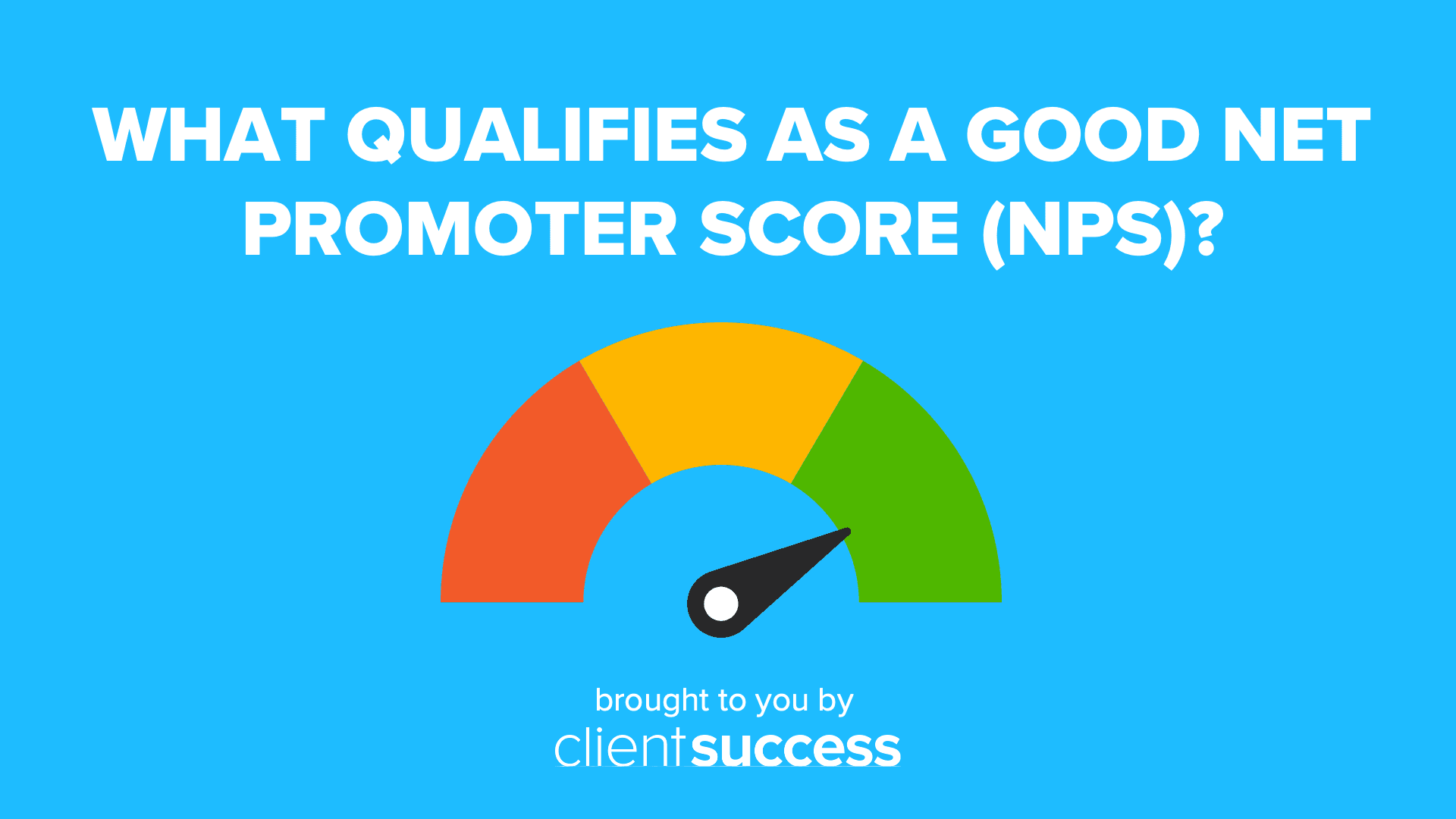
According to Bain & Co, the inventor of the NPS, any positive score, meaning any score above 0, is considered 'good' in the eyes of customer success. This means that the percentage of Promoters is greater than that of Detractors, which means your customer success efforts are trending positively. Other key benchmarks include:
- 20 or above = favorable
- 50 or above = excellent
- 80 or above = world-class
This scoring system also means that any score below 0, or anything in the negatives, is a 'poor' NPS. While facing a less-than-stellar NPS may incite slight feelings of initial panic, what it should mean is that there is plenty of room for growth and improvement in the way your team manages customers. If your team is dealing with a negative NPS, take a step back, address the glaring issues, and start working through your customers to identify areas of opportunity.



Frequently Asked Questions
What is a good NPS score?
How is NPS calculated?
What is the range of NPS scores?
See how ClientSuccess scales the playbook you've built.
Walk through it with a CS-led demo and see how it'd fit your team.