
The L.A.E.R. Model and Customer Success Health Scoring
The LAER model—Land, Adopt, Expand, Renew—is TSIA's customer engagement framework. Learn how it works and how to set up customer health scoring around it.
TL;DR
- The LAER model from TSIA stands for Land, Adopt, Expand, and Renew—a customer engagement framework for managing the post-sale relationship.
- To set up customer health scoring, first determine the data points and metrics to include, then weigh the importance of each one.
- Health scores must be trended over time, not gathered once a year, so CSMs can spot churn risk and act when red flags appear.
As customer success professionals know, there are multiple ways to understand, calculate, and grade customer health scores. These health scores help identify at-risk customers and help CSM’s reduce churn and attrition.
In a recent webinar, Phil Nanus, the VP of Research, Customer Success for TSIA, discussed his take on the evolution and growth of customer account health tracking. He also discussed how TSIA, an organization that helps technology companies make calculated business decisions, predicts ways the customer success grading process will change and grow in 2017 and beyond.
The Impact of Churn
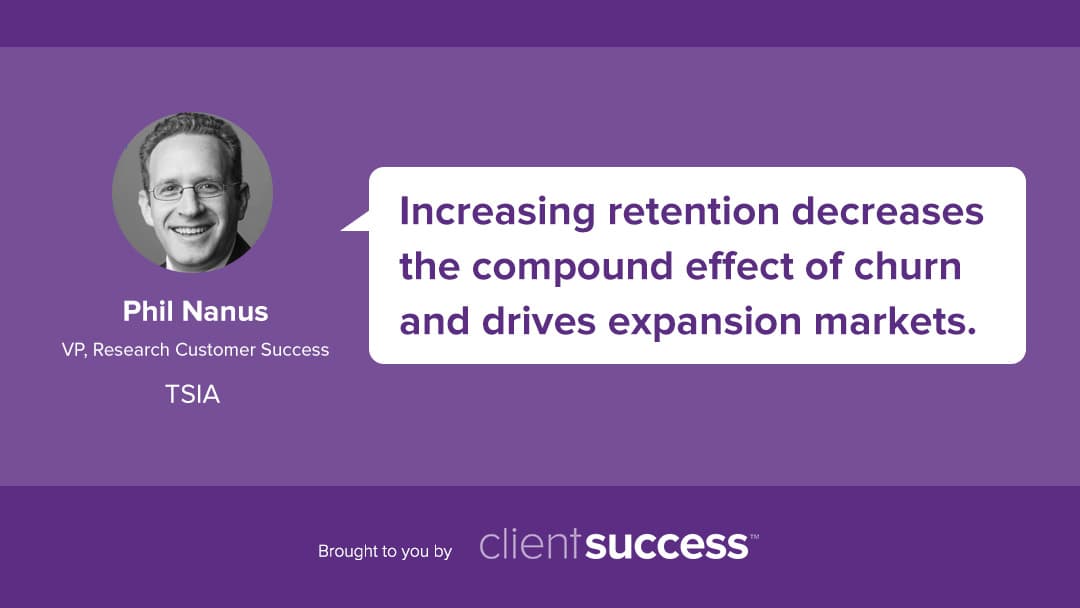
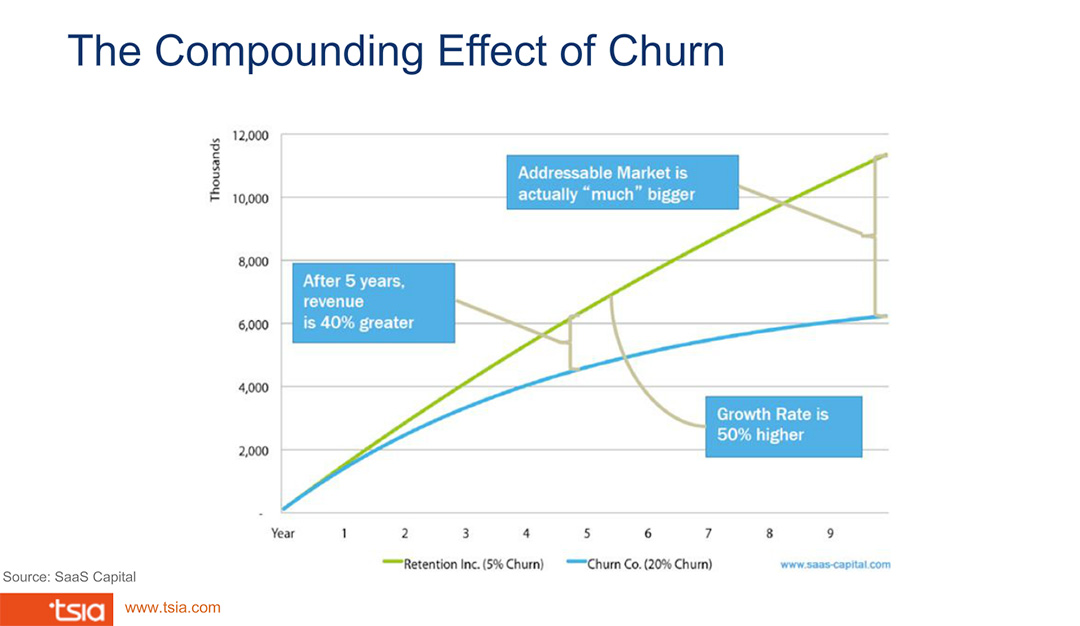
Nanus began his presentation by discussing the impact of churn. Why is decreasing churn so important? Nanus describes how, for SaaS companies, the compounding effect of churn is especially important because it impacts future upsell and cross-sell markets by rapidly shrinking target audiences. Nanus also introduced the importance of using predictive analytics to better predict if a company is at risk to churn or not. For the last 5 years, companies have been using predictive analytics scoring systems to better predict customer churn.
The L.A.E.R Model
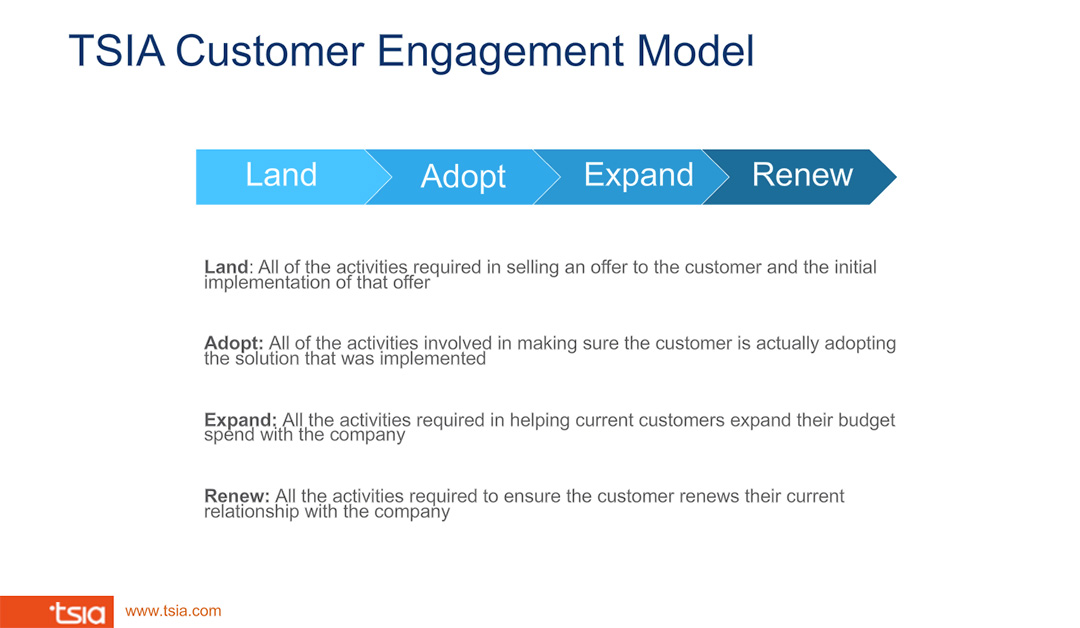
Nanus introduced the TSIA customer engagement model, which was designed to enable customer success professionals to leverage customer engagement in their favor. The TSIA “LAER” model is as follows:
- **Land: **the traditional sales process that introduces a customer to a brand.
- Adopt: a large focus of most CSMs, adoption includes showing new customers how they can use the product to reach their goals.
- **Expand: **this step includes education and telling customers what else they can accomplish with a platform.
- **Renew: **In this step, a customer and CSM can review the value the platform has provided and determine if it makes financial sense to continue the relationship.
Using the TSIA LAER model as a jumping off point, Nanus used the rest of his time to discuss the overarching importance of customer health scoring and how these numbers can help CS teams to predict customer churn.
How to Set Up Customer Health Scoring
- Determine Data Points and Metrics
First, customer success teams must determine what data points and metrics they want to include in the customer health score. Nanus recommends bringing together a small cross-functional group to establish these qualitative and quantitative metrics. There is no correct number of metrics; it can be as high as 10 or as low as 5, depending on what a team wants to measure.
- Weigh the Importance of the Metrics
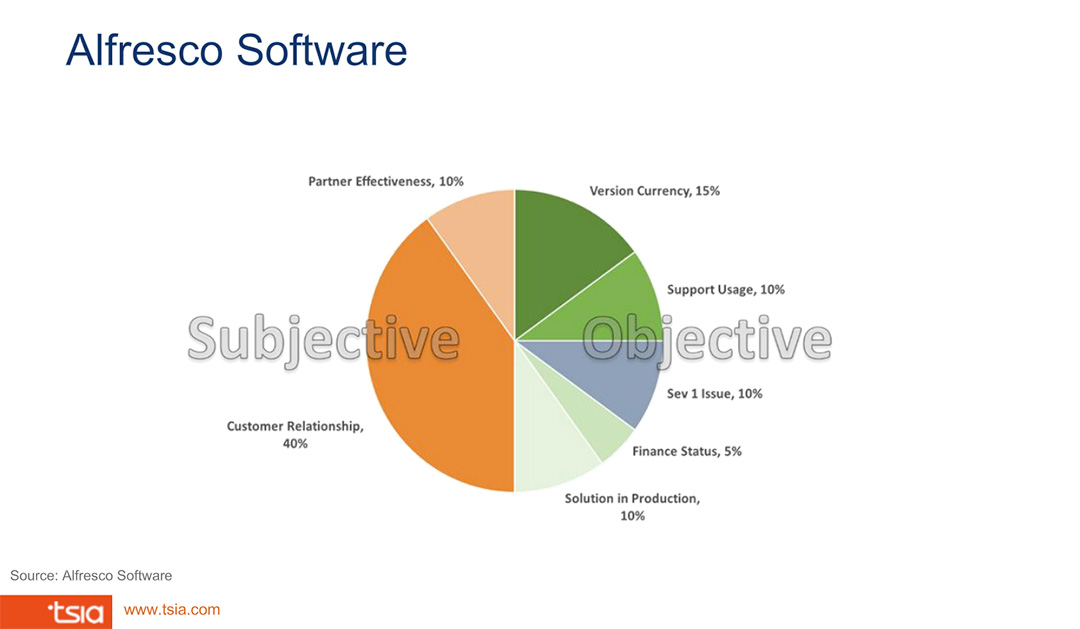
Next, the team should build out these metrics and weigh the importance of each category. Nanus highlighted Alfresco Software, a TSIA advisory board member, which used used metrics such as customer relationship, support usage, financial status, and partner effectiveness to grade their customers. It’s important to remember, however, that CSMs can’t just rely on gathering these scores once a year. Teams must trend these scores over time to be able to identify where churn is possible. This will also help CSMs take action when red flags occur.
#1 CSM Performance Metric: Retention that Drives Expansion
In a recent TSIA Customer Success Baseline Survey, the #1 CSM performance metric was retention. With the help of health score tools and predictive analytics solutions, CSMs can continue to meet these lofty goals. In order to move from reactive to proactive customer success, expansion must be the new number one charter or focus of customer success teams.
What Previous Roles Do CSMs Come From?
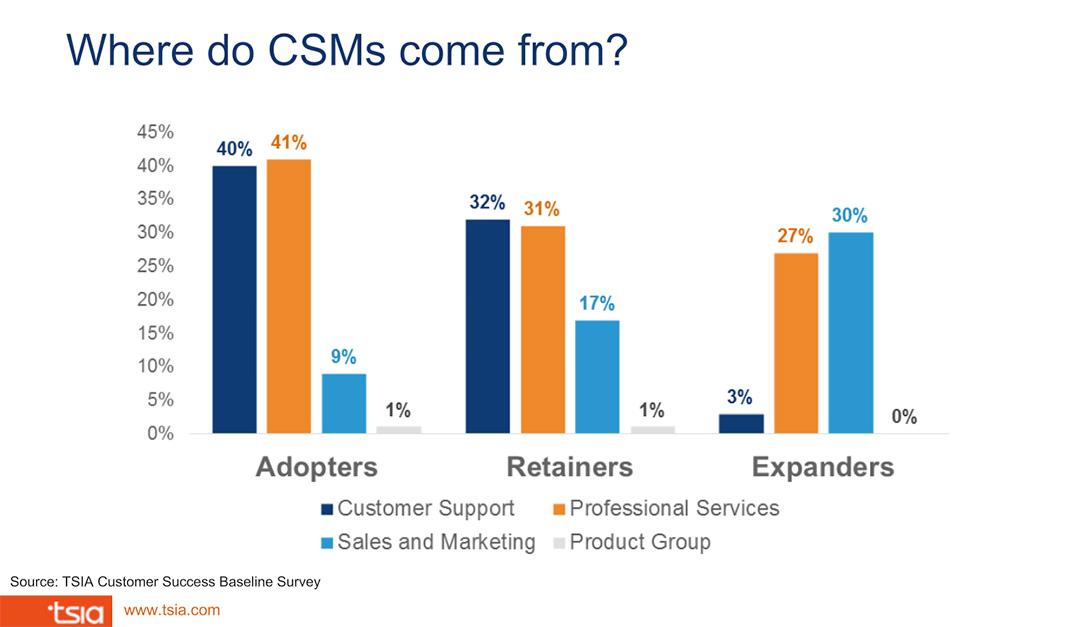
Looking at the traditional professional backgrounds of CSMs, there are many technology professionals, consultants, and even sales-focused professionals. Customer success leaders must evaluate if their CSM resources are being used correctly in a reactive environment or if they would be better leveraged in a proactive way through expansion activities.
By using the LAER customer health scoring model and refocusing CSM priorities around expansion, as well as churn prevention, customer success teams can proactively prepare for 2017. Want to learn more about health scoring? Check out these resources from ClientSuccess.
eBook:
Customer Success as a Culture: Customer Success Leaders Edition
Blog Posts:
The Golden Rule of Customer Success: 8 Guiding Principles
6 Listening Techniques of Great Customer Success Leaders
Learn more about how ClientSuccess can help your company develop a strong Customer Success methodology and strategy with easy-to-use customer success software by requesting a 30-minute demo.



Frequently Asked Questions
What is the LAER model?
How do you set up customer health scoring?
How many metrics should a customer health score include?
See how ClientSuccess scales the playbook you've built.
Walk through it with a CS-led demo and see how it'd fit your team.