
Hypergrowth to IPO in Customer Success - CS100 Summit Session Recap: Mitch Macfarlane
Instructure's Mitch Macfarlane on scaling customer success from hypergrowth to IPO: get core principles right, know your metrics, and scale with operations.
TL;DR
- Mitch Macfarlane scaled customer experience at Instructure from 3 to over 300 employees in five years, hit 100% net revenue retention, and kept NPS consistently above 50.
- His three principles for scaling CS from hypergrowth to IPO are: get your core principles right, know your metrics, and scale with operations.
- Beyond net revenue retention, he points executives to gross margins and renewal costs as metrics that show whether the company is investing in the right places.
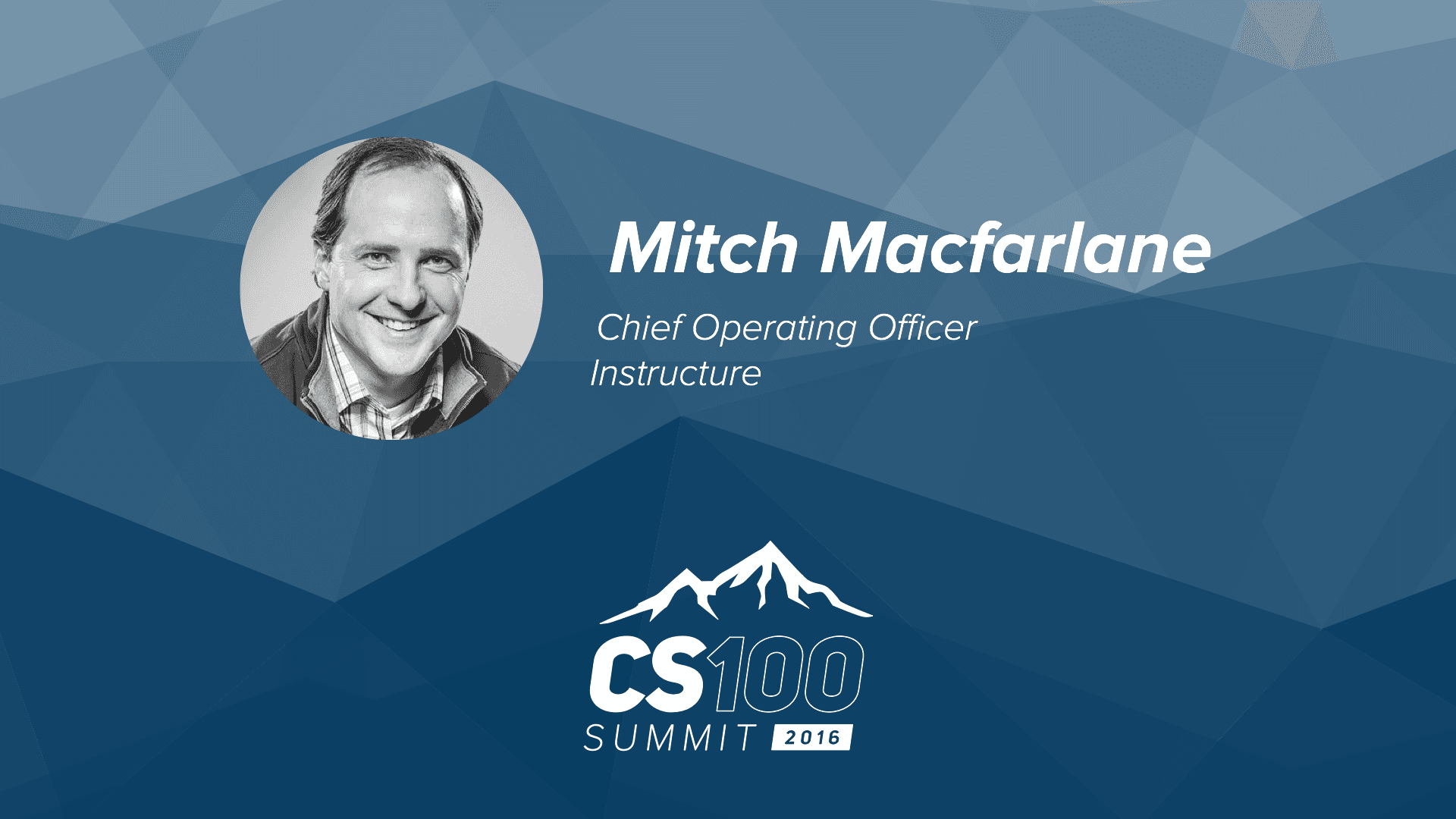
Mitch Mcfarlane, SVP of Product and Customer Experience at Instructure, recently spoke alongside several other customer success executives and leaders at the CS100 Summit 2016 in Park City, Utah. At Instructure, Mitch succeeded in scaling customer experience from 3 to over 300 employees in just 5 years. He also helped the team hit 100% net revenue retention during this time and kept NPS scores consistently above 50.
Watch the video of his presentation below:
As a speaker at the CS100 Summit, Mitch discussed how customer success is the key to hyper growth in SaaS companies, from idea to IPO stage. It can sometimes be difficult to get decision makers such as executives or a Board of Directors behind customer success, as it lacks the ‘incoming revenue glamour’ of sales-based functions but, as Mitch points out, it is a necessary thing to do.
Instructure is a global company with offices and clients across the world, and they got there with a clear customer success strategy and growth plan in mind. Mitch started his presentation by outlining three guidelines Instructure observes to help drive continued success.
Three Principles to Drive Hypergrowth to IPO in Customer Success
1. Get the Core Principles Right
*“Getting your core principles right. Knowing who you are.” *
Don’t be a bully to your customers! Right away, Mitch set the tone by mentioning cable providers, airline service, and mobile providers who are notorious for providing a ‘bad customer experience’. But the key takeaway is this - being known for bad customer service is not a selling point. A company’s core principles are at the heart of every decision they make from the early stages of growth all the way up to when they file an IPO. Mitch laid out some examples for the CS100 audience:
- Will you provide a world-class customer experience or reduce costs? Although excellent customer service may be more expensive in the short-term, the long-term ROI is much more valuable.
- Will you value long-term relationships over short-term revenue? Don’t tarnish your company’s reputation in the marketplace or industry by being branded a bully - work with customers and competitors alike to solve problems.
- Will you solve problems or sweep them under the rug? Rapid growth can often mask larger problems in an organization. It’s harder to correct faulty processes later on than start with a good foundation, which is why hyper growth companies must focus on this from the very beginning.
Mitch hits home on the point that it is very hard to get over setbacks such as high turnover rates, bad reputations, or other ‘black marks’. Companies who are open and respectful to customers via feedback and direct communication can build up this trust and create fruitful relationships for all involved
2. Know Your Metrics
“You have to know your metrics and how to talk about them, both to your Executive staff and the people who work for you.”
Practice customer success! While this sounded like a silly concept at first, Mitch explained the Instructure inside lingo to the CS100 crowd. It’s imperative that customer success objectives align with company-wide objectives, so it’s important for customer success leaders to keep other departments at top-of-mind. This means enabling new sales, influencing product releases, and more interdepartmental alignment. Mitch highlighted four key metrics he as a customer success and product leader relies on:
Important Questions to Ask
- What clients have been silent recently? What is causing this lack of communication?
- What clients are at risk? Is there a root cause?
- What are my top 20 (or top 10) accounts where I as a leader should be focusing my time?
- Are we excelling in our NPS measurement scores?
While net revenue retention is always going to be the #1 metric customer success teams are graded on, there are a couple more that can be even more beneficial when talking to executive teams or a Board of Directors. These include gross margins and renewal costs - both point out to executives if they are making the right investments in the right places.
Mitch also cautioned presenting to executive team’s without predetermined metrics or well-thought out points in hand. He said that aligning your team’s success to overall company objectives will get executives coming to you asking questions about what they are interested in - which is your success.
3. Scale with Operations
“Scaling is really tough. But we all have to do it.”
Replace yourself often! In a scaling and growing company, your job will grow and change. Efficient onboarding processes are key to keeping leaders in place where they can make strong contributions to the company. Mitch also highlighted the importance of driving accountability and repeatable success across departments - and even on a company-wide level.
For companies looking to hit this IPO milestone, it is imperative to look at long-term financial metrics and data. This means hiring people better than you to replace you. As long as there are winning people to take your place when you move up, your company will continue to thrive. Mitch walked through the stages of company growth, from 3 people all the way up to 300 in a single department, and highlighted the importance of empowering leaders and directors.
“Great customer service comes from happy employees.”
During his closing statements, Mitch visited the much-loved ‘great cheese comes from happy cows’ trope. While all of the metrics, positioning, and growth initiatives are important, customer success really boils down to whether or not your employees believe in your company, in your leadership, and in your mission. Mitch ended his presentation with reiterating this idea of investing in your employees, in their education, and in their continued growth within your company to truly make the leap from hypergrowth to IPO.
You can watch Mitch’s entire presentation here.
Join us this September at the CS100 Summit 2017 at Sundance, Utah. This is an exclusive summit for leaders of customer success teams. Rub shoulders with the best leaders in the industry. There are only 100 executive seats available and we sold out last year. Learn more and register here.

Download the full “Customer Success as a Culture” eBook series:
Customer Success as a Culture: Customer Success Leaders Edition
Customer Success as a Culture: Sales Leaders Edition
Customer Success as a Culture: Marketing Leaders Edition
Customer Success as a Culture: Product Leaders Edition
Learn more about how ClientSuccess can help your company develop a strong customer success methodology and strategy with easy-to-use customer success software** **by requesting a 30-minute demo**.**
Frequently Asked Questions
How do you scale customer success from hypergrowth to IPO?
What customer success metrics matter most to executives?
See how ClientSuccess scales the playbook you've built.
Walk through it with a CS-led demo and see how it'd fit your team.