
What is Customer Lifetime Value (CLV), and Why Does It Matter?
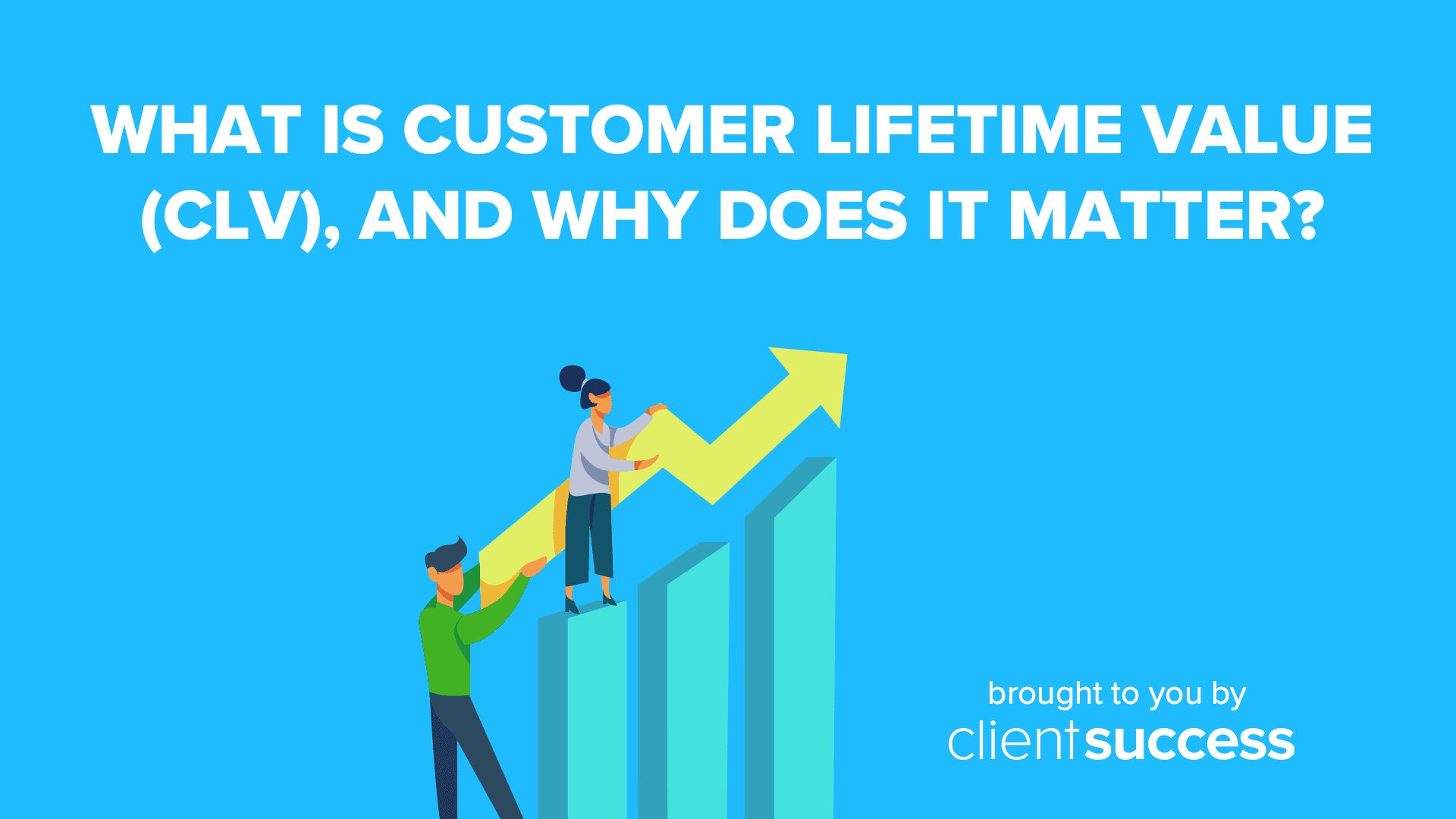
Customer lifetime value (CLV) is the total revenue a customer brings across their partnership. Learn what CLV includes and why it matters to customer success.
TL;DR
- Customer lifetime value (CLV) is the total revenue a customer brings an organization across their entire partnership — initial sale, upsells and expansions, ad hoc change orders, and renewals.
- CLV matters to customer success because most post-sale revenue (upsells, expansions, renewals) is managed in part by CSMs, even when a sales rep handles contract details.
- Mapping a transparent lifecycle strategy with customers early helps teams forecast CLV accurately and prepares customers for future growth conversations.
When a new deal is closed, there is a period of celebration and excitement within every organization. Sales cycles can be long and fraught and deserve to be applauded. But as more and more SaaS organizations realize, the actual value of a new customer isn’t tied to that initial sales number at all but spread out across the customer’s entire lifecycle at an organization.
Understanding customer lifetime value
Customer lifetime value (CLV) is the total revenue – aka value – a customer can bring in for an organization throughout their entire partnership. This includes the initial sales value, upsells or expansion deals, ad hoc change orders throughout the partnership, and renewal value. Some organizations also group tangential revenue into this total CLV by including things like referrals, sales attributed to marketing efforts, and other initiatives.
Higher returns in the long term
We’ve all heard the adage that it costs less to retain your current customers than to find new ones. From a mental standpoint, this is true, but it is also valid on paper. Because sales cycles can be rife with complications, it is, in fact, more cost-effective to keep your current customers happy, satisfied, and growing at an expected pace throughout their lifecycle
CLV matters to customer success teams because although sales reps manage initial deals, many of the post-sales revenue (upsells, expansions, renewals, etc.) are managed in some part by CSMs. Even if you are pulling in a sales rep to help with the finer points of a contract deal, CSMs will often remain the point of contact for a customer during these conversations. It helps if your customer is set up early to expect and anticipate these conversations during their lifecycle.
Building a customer lifecycle strategy
For this reason, it’s recommended that high-functioning customer success teams present a transparent lifecycle planning strategy to their customers. This means sitting down early in the partnership and mapping out exactly where your customer is heading with your solution. If there is a three or five-year contract in play, how will their goals be different down the road? Where do they hope to end up with your solution? And, at the end of the day, what new features, functionality, or growth initiatives will help them reach these goals?
Talking about these expectations and staying open with your customers can help your internal team accurately ahead and forecast CLV down the road. In addition, these discussions can ensure your customers themselves are ready and prepared for these conversations when they do happen.
Ready to get started?
CLV planning and account forecasting can be daunting for CSM teams that don’t have the proper visibility and insights into key customer success metrics and data sources. With ClientSuccess, your team can have access to the information you need to plan and discuss CLV, as well as the tools to increase transparency with other departments and your customers.
You can learn more about CLV with these additional resources from ClientSuccess:
Frequently Asked Questions
What is customer lifetime value (CLV)?
Why does customer lifetime value matter?
How can customer success teams improve CLV?
See how ClientSuccess scales the playbook you've built.
Walk through it with a CS-led demo and see how it'd fit your team.