
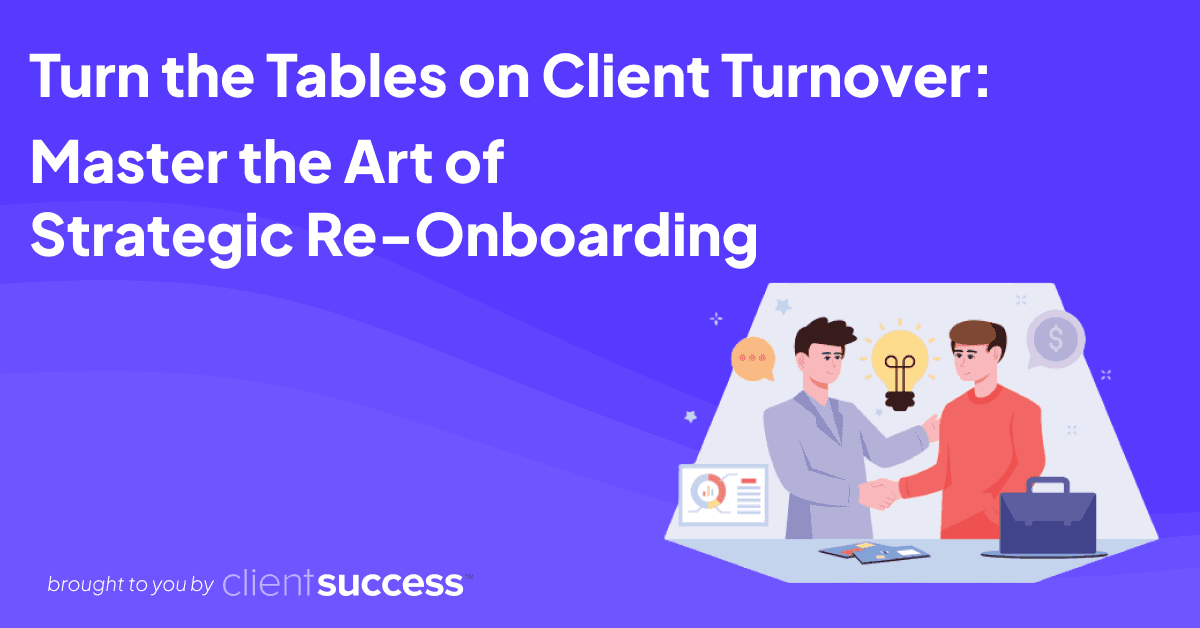
Turn the Tables on Client Turnover: Master the Art of Strategic Re-Onboarding
When a client contact leaves, re-onboarding aligns their replacement with the value you deliver. Learn a 5-step program to prevent churn from personnel changes.
TL;DR
- When a client-side contact leaves, their replacement may not understand the value your product delivers, which can delay projects, reduce efficiency, and risk the relationship.
- Re-onboarding quickly aligns new contacts with the solutions already in place, delivering quick alignment, continued satisfaction, and strengthened relationships.
- An effective re-onboarding program has five steps: identify personnel changes, welcome and introduce, run tailored educational sessions, provide resources, and gather feedback.
In a dynamic business environment, client-side turnover is inevitable. New stakeholders can mean a reset on the understanding and value perception of your services. Strategically re-onboarding new client contacts is not just about continuity; it's about maximizing the usage and perceived value of your products or services. This proactive approach ensures that transitions do not disrupt the ongoing value delivery, helping new contacts see the immediate benefits and facilitating seamless project continuation.
Client turnover introduces uncertainty into established business relationships. When your point of contact at a client company leaves, their replacement may not understand the value your product or service brings. This can delay projects, reduce efficiency, and even risk the client relationship entirely.
Consider the disruption when a well-acquainted client contact is replaced by someone new who is unfamiliar with the nuances of your services or products. The learning curve can be steep, and during this period, misunderstandings and frustrations can escalate, potentially harming the client relationship.
Re-onboarding emerges as a strategic solution to quickly align new client contacts with the services and products they will be using. This approach ensures they understand the value and functionalities of the solutions already in place, promoting a smooth transition and continuous collaboration. Benefits include:
- Quick Alignment: Ensures new contacts are up to speed with the existing agreements and how your solutions meet their needs.
- Continued Satisfaction: Maintains the level of service the client has come to expect, preventing any drop in satisfaction during the transition.
- Strengthened Relationships: Shows commitment to the client's success, strengthening trust and loyalty with the new contact.
Implementing an effective re-onboarding program involves several key steps:
- Identify Changes: Monitor your client companies for key personnel changes. Stay proactive by establishing alerts or regular check-ins.
- Welcome and Introduce: As soon as a new contact is identified, reach out to introduce your company and express eagerness to support their goals.
- Educational Sessions: Arrange tailored re-onboarding sessions that overview your services or products, focusing on how they meet the client’s needs.
- Provide Resources: Offer comprehensive guides and resources that new contacts can refer to after initial meetings, ensuring they have support on hand.
- Gather Feedback: After re-onboarding, seek feedback to refine the process continually. Understanding the new contact's perspective helps improve future engagements.
Client-side turnover doesn't have to lead to service disruptions or weakened relationships. With a proactive re-onboarding strategy, you can ensure new client contacts are quickly aligned with their company’s existing engagements. This not only supports smooth transitions but also reinforces the value of your partnership, paving the way for continued collaboration and satisfaction.
Implement these strategies to maintain strong client relationships even in the face of frequent turnover.


Frequently Asked Questions
What is re-onboarding?
How do you re-onboard a new client contact?
See how ClientSuccess scales the playbook you've built.
Walk through it with a CS-led demo and see how it'd fit your team.