
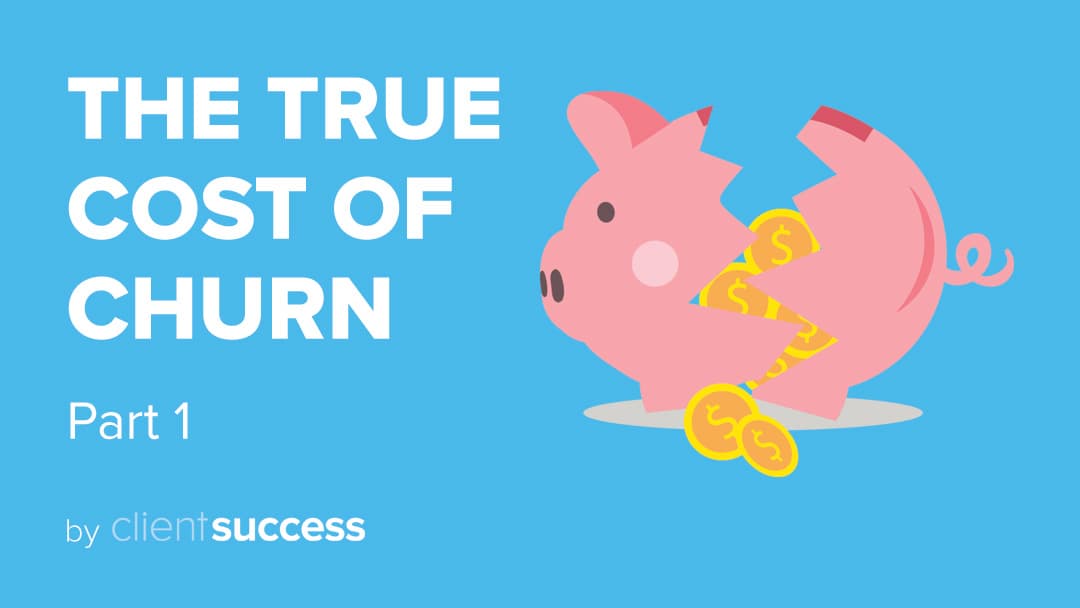
The True Cost of Customer Churn - Part 1
Customer churn costs far more than lost ARR. See how lost recurring revenue, missed expansion, and CAC add up to a real example of $900K in true churn cost.
TL;DR
- The true cost of churn goes well beyond lost ARR; the first three factors are lost recurring revenue, lost expansion opportunity revenue, and the customer acquisition cost (CAC) to replace the lost customers.
- In the article's example, churning 10 customers at $50,000 each totals roughly $900,000: $500,000 lost recurring revenue, $100,000 lost expansion revenue, and $300,000 in CAC to re-acquire them.
- Acquiring a new customer can cost up to 5 times as much as retaining one, and the probability of upselling an existing customer (~65%) far exceeds selling to a new prospect (~13%).
Retaining customers is a bottom-line must for successful companies—especially SaaS companies where a predictable customer base is a must. An organization’s customers are the greatest asset it can have, and the longer those customers continue to invest in products and services, the more valuable they become.
This is why the concept of churn is so important to both growing and established organizations alike. As a customer success leader, you understand the importance of keeping customers successful along their journey with your organization. But the true cost of churn is rarely considered to its full implications. Not only does churn mean lost revenue, it also means your team has to double down on acquiring new customers for those that are lost. After all, it can cost up to 5 times as much to acquire a new customer as it does to retain your current ones.
**The True Cost of Churn - First 3 Factors
**
In this post and in our follow-on “The True Cost of Customer Churn: Part 2” post, we’ll explore various aspects of churn that most customer success leaders and company executives don’t consider when calculating retention and churn rates. Let’s explore.
1. Lose Recurring Revenue
The easiest way to clearly understand the true cost of churn is by using hard numbers. Let’s say that, for example, your organization’s average contract value is $50,000. This means that losing even 10 customers a year valued at $50,000 each to churn can cost your organization upwards of $500,000 annually in lost ARR.
2. Lose Expansion Opportunity Revenue
In addition to the cost of recurring revenue each year, there’s also potential for loss of renewal income or upsell deals which are frequently excluded when calculating churn costs.
The probability of upselling to an existing customer is around 65%, compared to the probability to selling to a new prospect which is only around 13%. This means that for every current customer lost to churn, your organization is also missing out on a 65% chance of a new upsell or cross-sell opportunity. If your current customers are your most likely buyers, then the main goal of your entire organization should be to hold on to them as tight as possible.
Let’s say that your company has a expansion revenue goal of 20%. So you if churn $500,000 of recurring revenue (ARR), you are also losing the expansion dollars of $100,000.
3. CAC Cost to Acquire the New Customers
When churn occurs, not only does your marketing team have to dedicate time and resources to bringing in new leads and prospective customers, but now they have to refocus their attention to re-attract customers that have been lost.
Now, consider it costs approximately $30,000 to acquire a new customer (referred to as customer acquisition cost, or CAC). This means that in order to re-acquire all 10 lost customers, it could cost your organization over $300,000 annually. That represents nearly half a million dollars spent trying to recapture business your organization already had, but let slip through the cracks.
So let’s add up the true impact of customer churn:
- $500,000 loss recurring revenue
- $100,000 loss of expansion revenue
- $300,000 CAC cost to acquire the lost customers
**= $900,000 true cost of churn. **
At the end of the day, customer churn is unavoidable. There will always be unforeseen circumstances or issues that arise that result in churn. It is important, however, to realize that churn comes at a higher cost than just the absence of a logo on your nascar slide. Departments throughout your organization rely on customer retention to not only pay the bills, but more importantly, to make their time and efficiency count towards your company’s higher mission.
As is often the case, there are ways innovative organizations and customer success teams can proactively combat customer churn while also increasing retention and renewals. Decreasing monthly churn by just 5 customers (at a monthly contract size of $4,166) can save your company upwards of $250,000 a year.
Check back soon for “The Trust Cost of Customer Churn: Part 2” to learn more about the final 3 cost factors including negative network effect and the impact of referrals, brand leadership, and second-order revenue.


Frequently Asked Questions
What is the true cost of customer churn?
Why does churn cost more than the lost contract value?
See how ClientSuccess scales the playbook you've built.
Walk through it with a CS-led demo and see how it'd fit your team.