
Net Promoter Score (NPS) Benchmarks for Customer Success Professionals
NPS benchmarks for SaaS, B2B, and CS-focused organizations. See the average, top quartile, and world-class NPS scores by industry.
TL;DR
- NPS is calculated by subtracting the percentage of detractors from the percentage of promoters.
- Recognized NPS benchmarks by industry are: Consulting 62, Digital Marketing 57, Cloud & Hosting 45, Technology 39, and B2B Software & SaaS 30.
- NPS is only one customer success metric—useful for gauging performance, but far from the only data point a team should track.
Whether you are brand new to the customer success scene or have been a customer success professional for years, one metric of success has been on your radar since day one: Net Promoter Score. NPS is a great way to measure customer satisfaction, customer willingness to be part of marketing efforts, and growth potential.
Recap: what is a Net Promoter Score?
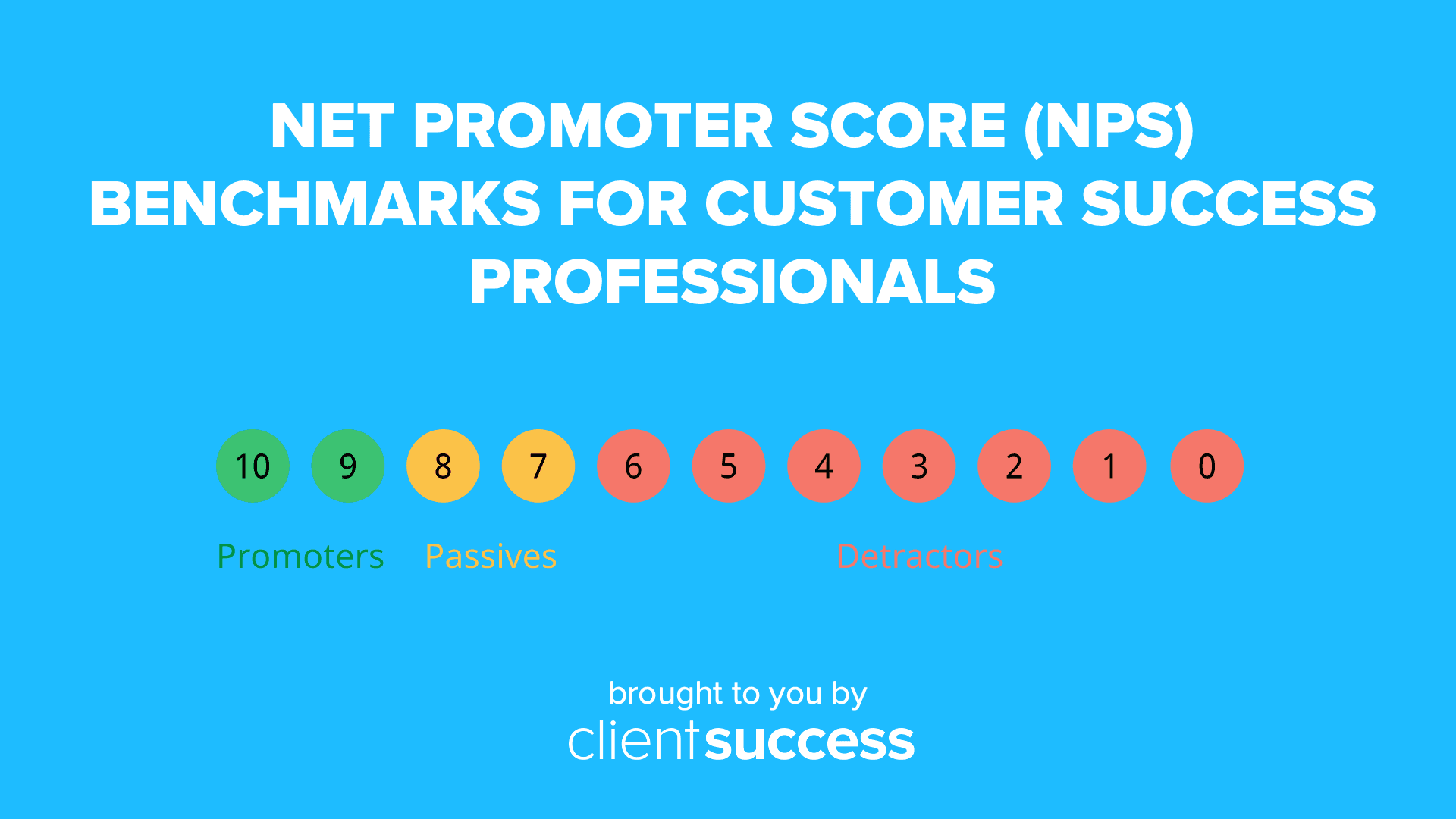
Before we get into benchmarks, let's take a step back and review what NPS entails. NPS is calculated from the answers an organization receives after asking its customers and users one specific question: On a scale of 1 – 10, how likely are you to refer this organization's product or services to a friend, peer, or colleague?
To calculate NPS, you subtract the percentage of detractors (would not recommend) from the promoters (would recommend) percentage. Let's say 60% of NPS respondents are promoters, and 15% are detractors. 60 – 15 = 45, which is now your NPS score.
NPS benchmarks
So what does your NPS score mean? How do you know if your NPS is good, bad, or simply average for your industry? Here are some recognized NPS benchmarks to measure your score against:
- Consulting – 62
- Digital Marketing – 57
- Cloud & Hosting – 45
- Technology – 39
- B2B Software & SaaS – 30
These benchmarks can help serve as a way to gauge how your team is performing when it comes to serving customers. When working with NPS, however, it's always important to remember that this is just one customer success metric. While NPS may be the most well-known and widely recognized data point for many customer success teams, it is far from the only data point out there.
Next steps
You can take action now that you know how your NPS stacks up in your industry. If your score is below average, now is the time to rethink your customer success strategy and find ways to increase customer satisfaction. If you are right on the benchmark, what things can you tweak to take your customer success strategy to the next level? And, if you are above the benchmark, now is not the time to fade off. Instead, double down on the workflows you have in place that resonate well with your customers.
Want to learn more?
You can learn more about NPS and find new ways to optimize your customer success strategy with these additional resources from ClientSuccess:



Frequently Asked Questions
What are NPS benchmarks by industry?
How is NPS calculated?
Is NPS the only customer success metric that matters?
See how ClientSuccess scales the playbook you've built.
Walk through it with a CS-led demo and see how it'd fit your team.